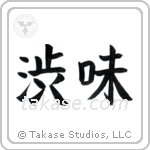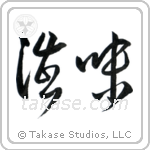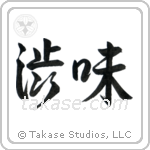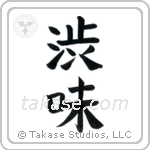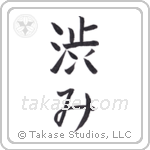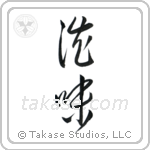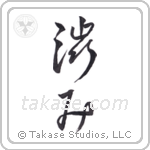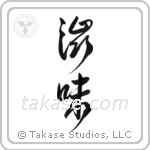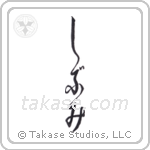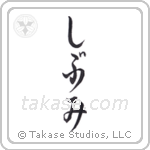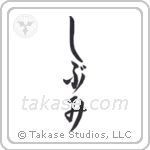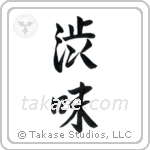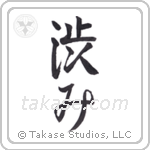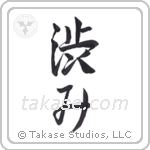
渋み (shibumi)
The Japanese word 渋み literally means "astringency" or "astringent taste" and is related to the word 渋い (read shibui), however, 渋み is used to mean the Japanese aesthetic of "austere elegance" or "quiet beauty".
The word 渋み has been commonly written differently over the centuries. That is, the word is the same, the meaning is the same, but the "spelling" is different. Previously, the all kanji 渋味 was common. However, "recently" 渋み has gained favor and the reasoning is clear: shibumi is quintessentially Japanese and writing shibumi partly or all in hiragana makes the word itself uniquely Japanese.
Here I include designs for all three variations: 渋味, 渋み, and しぶみ. My personal preference is to use 渋み though you can correctly choose the design and the spelling that appeals to you.