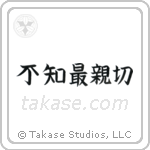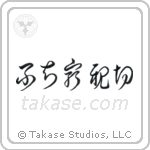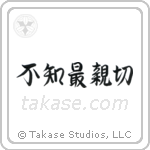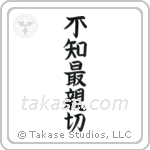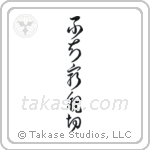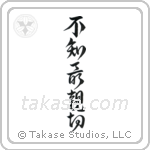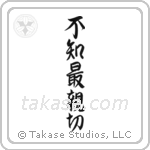
不知最親切 (fuchi sai shinsetsu)
The Zen phrase 不知最親切 is from the 20th Koan in Shoyoroku - called "The Book of Equanimity" (also "The Book of Serenity") written in the 12th Century by Hongzhi Zhengjue. This phrase has been described as the heart of Zen Buddhism. The Koan goes that Jizo asks Hogen where he is going. Hogen replied on a pilgrimage. Then Jizo asked why and Hogen replied that he did not know. To this Jizo said, "Not knowing is most intimate".
For this design we have used the Chinese characters. The modern Japanese would be only slightly different reading fuchi mottomo shinsetsu and written 不知最も親切.
There are several great on-line resouces. See Eric Boix page Shoyoroku for English translations. If you have Japanese fonts you can read discussions on the Koan at Shouyouroku Kouwa by Douken Takada [1906] and Shouyouroku Tsuukai by Nyoten Jinbo [1915]. Also we suggest the book The Book of Serenity: One Hundred Zen Dialogues
不知最親切 is composed of the word 不知 (read fuchi) meaning "not knowing; ignorance", 最 (read sai), and 親切 (read shinsetsu) meaning "intimate" (note this is the Chinese meaning).