
Hiroyuki Fukunishi, Japanese Papermaker
Living National Treasure
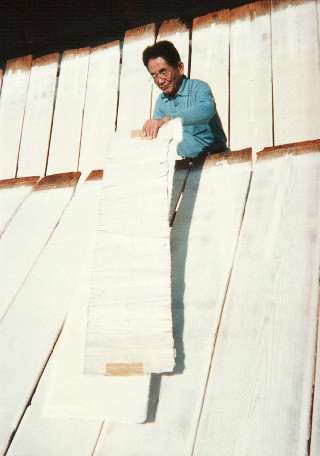
In the winter of 1997, we had the honor of meeting and spending a considerable amount of time with Mr. Hiroyuki Fukunishi. Mr. Fukunishi is one of those rare individuals that you only read about. He has demonstrated Yoshino papermaking to sixth graders and to the Emperor of Japan. He is a consultant to NHK on papermaking and has been the advisor in several important movies that showed papermaking. His expertise in the techniques of yamato udagami washi has resulted in his being designated a living national treasure by the Japanese government.
In the papermaking village of Yoshino, just north of Nara, for every year for the last thirty years, Mr. Hiroyuki Fukunishi and Mr. Hirofumi Honsako have taught the graduating class of Ryoma Elementary School to make their own graduation diplomas. The children participate in every step of the papermaking process from the harvesting of the kozo to the making of the paper.
We had the pleasure of participating one year, and below are the photos and description of the process involved in creating hand-made Japanese paper.
The Location — Kubogaito in Yoshino
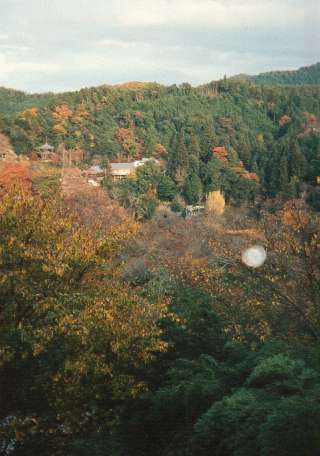
The Yoshino river. Here Mr. Fukunishi's family have washed the kozo bark for centuries. This pure and wonderful water is essential for the fine Yoshino paper.
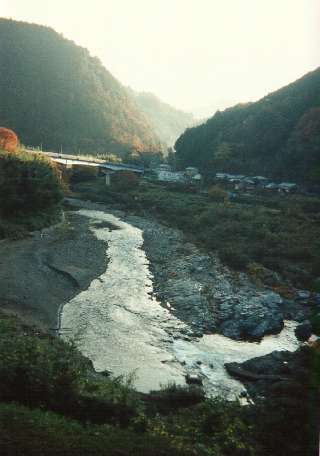
The general store just down the mountain from Mr. Fukunishi's house and workshop. This is the landmark you want to look for when getting off the bus. Though in this town all you have to do is tell the bus driver "Fukunishi" and make a motion like you are making paper and you will be sure to get to the right place.
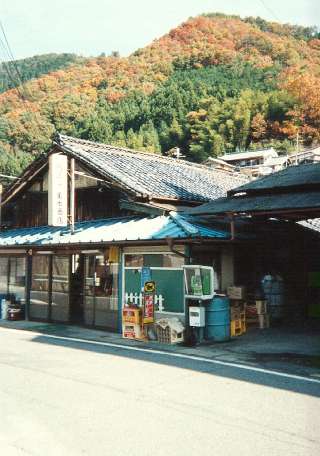
The Workshop
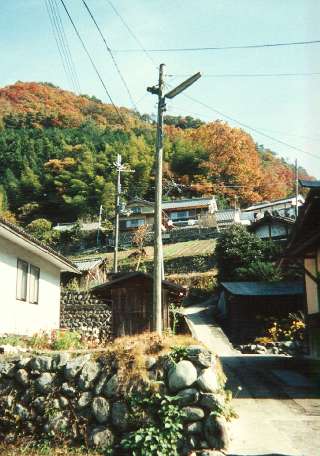
Mr. Fukunishi's home and studio sit at the top of the hill.
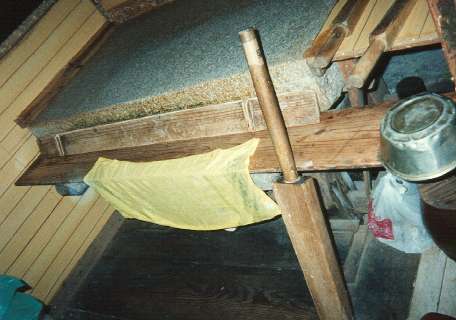
The kozo pounding table and mallet. The kozo is not smashed, or pounded really. The idea is to hit it with a horizontal motion to separate the fibers.
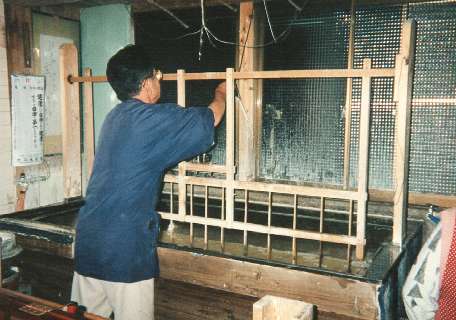
Preparing the slurry. The fibers need to be evenly distributed in the water.
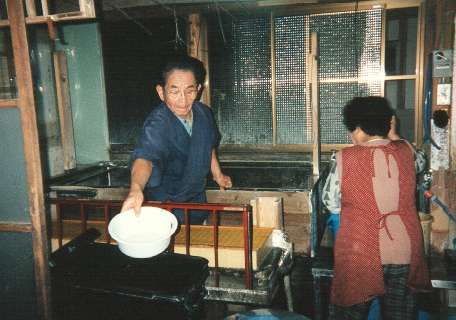
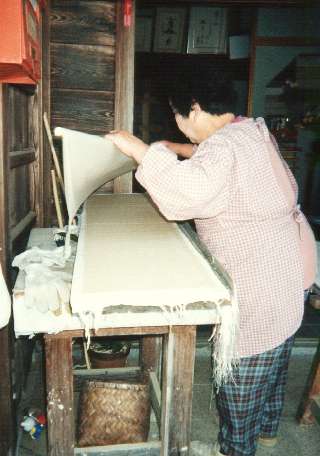
Mr. Fukunishi and his wife making the paper. The wife of a papermaker is also a papermaker. Notice the stack of newly created paper on the table.
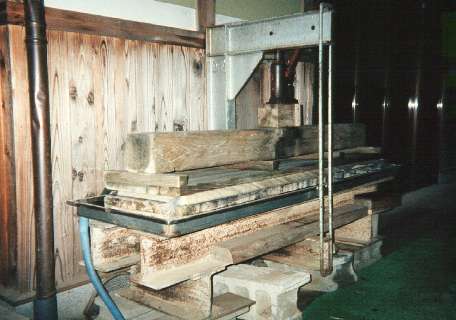
Pressing the paper to get the water out is a slow careful process. Here the newly created paper is pressed. Notice the only thing between each sheet of paper is a thin silk string.
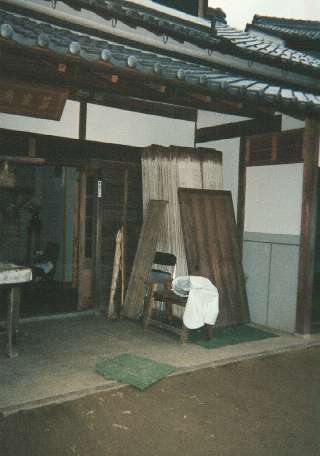
The paper will be dried on these ancient boards.
Mrs. Fukunishi carefully lifts a sheet of this fragile paper onto a dowel and the paper will be skillfully placed on the drying board.
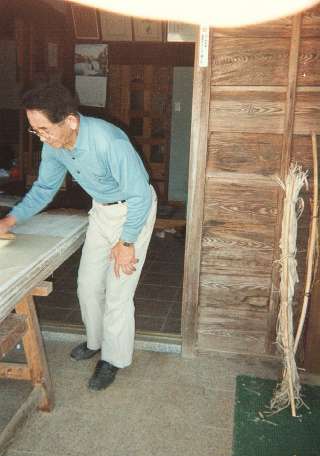
Mr. Fukunishi checks on the paper drying in the sun. Every detail is attended to — the ground has even been watered so dust will not blow onto the paper.
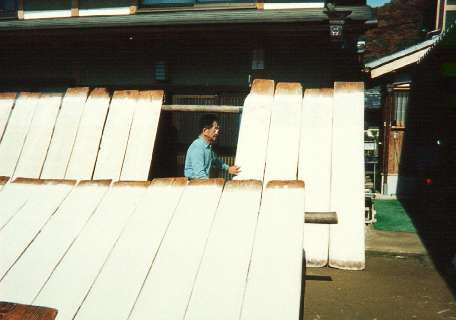
The paper is dried and Mr. Fukunishi lifts the paper from the drying boards.
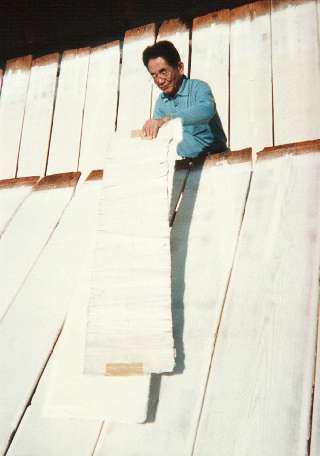
I asked Mr. Fukunishi about these boards used for drying the paper and what I should look for. He said that most boards are unusable for the first hundred years because of resins and contaminants. But after that, they work perfectly well.
Teaching the Art
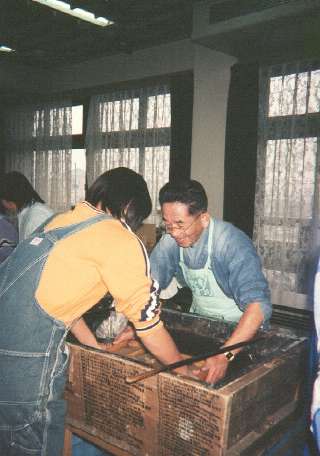
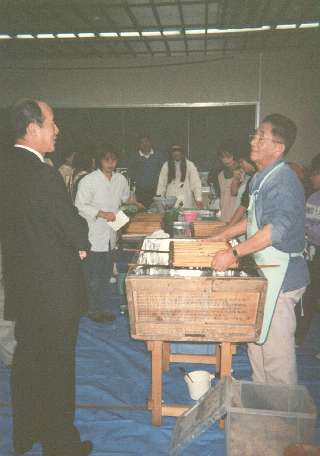
Weekly, and often times several times a week, Mr. Fukunishi is out giving hands-on demonstrations of Japanese papermaking. Here the Mayor is thanking Mr. Fukunishi for leading this parent/child workshop.
The Diplomas of Ryoma Elementary School
Every year the sixth graders of Ryoma Elementary School in Yoshino, Japan make their own diplomas. As befitting an important papermaking area, the students make their diplomas starting in the kozo field. They cut the kozo, strip off the bark, remove the outer bark, soften the inner bark, and so on until they have a diploma. This entire process requires almost a month to complete.
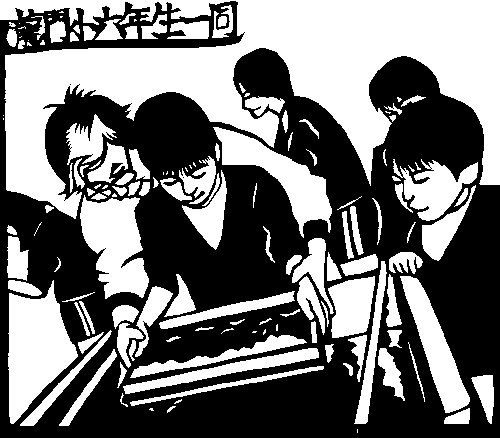
For the full details of this remarkable process, see The Diplomas of Ryoma Elementary School.
Mr. Fukunishi and his successor, his son Masayuki Fukunishi, teach papermaking workshops. If you are ever in Nara, this would be a rare and special experience.