
稲妻にさとらぬ人の尊さよ (inazuma ni satoranu hito no tattosa yo)
Japanese has changed dramatically since this haiku was written. Today the word toutosa (from 貴 (read toutoi)) is used in place of the archaic tottosa). So one sees the romaji for this poem written both ways. Here we have opted to use the older form (how Basho originally pronounced the characters) rather than using the modern pronunciation. This does not change the calligraphy, just how the poem is read.
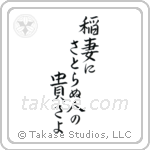
Basho - How admirable, to see lightning, and not think life is fleeting
Block Vertical
Basho - How admirable, to see lightning, and not think life is fleeting
Block Vertical
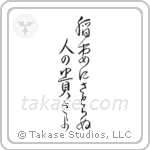
Basho - How admirable, to see lightning, and not think life is fleeting
Cursive Vertical
Basho - How admirable, to see lightning, and not think life is fleeting
Cursive Vertical
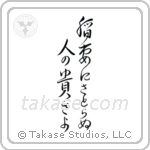
Basho - How admirable, to see lightning, and not think life is fleeting
Design Vertical
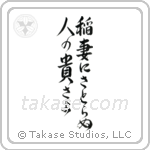
Basho - How admirable, to see lightning, and not think life is fleeting
Design Vertical
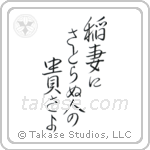
Basho - How admirable, to see lightning, and not think life is fleeting
Semi-Cursive Vertical
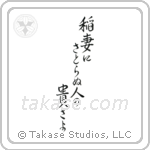
Basho - How admirable, to see lightning, and not think life is fleeting
Semi-Cursive Vertical